Long-Range 7″ FPV Quadcopter — Design, Build, and Configuration
Long-Range 7″ FPV Quadcopter: Design, Build, and Configuration
I started this project after watching an FPV drone chase homemade gliders at Red Bull Flugtag on the Ohio River. It tracked a launch, dove thirty feet, and pulled up inches above the water. I had built and raced RC cars since fifth grade, but I had never seen a machine fly like that. I wanted to build one myself.
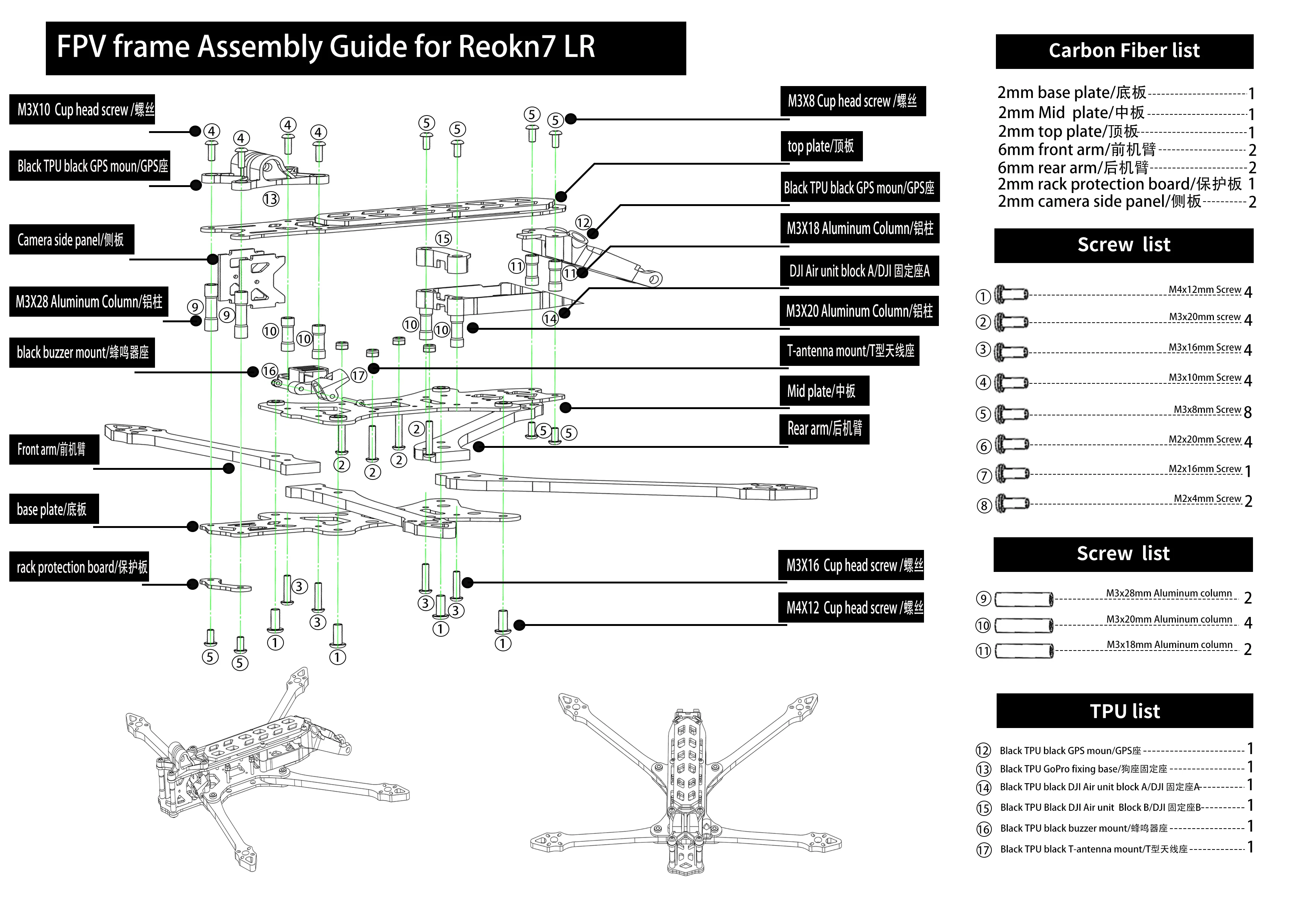
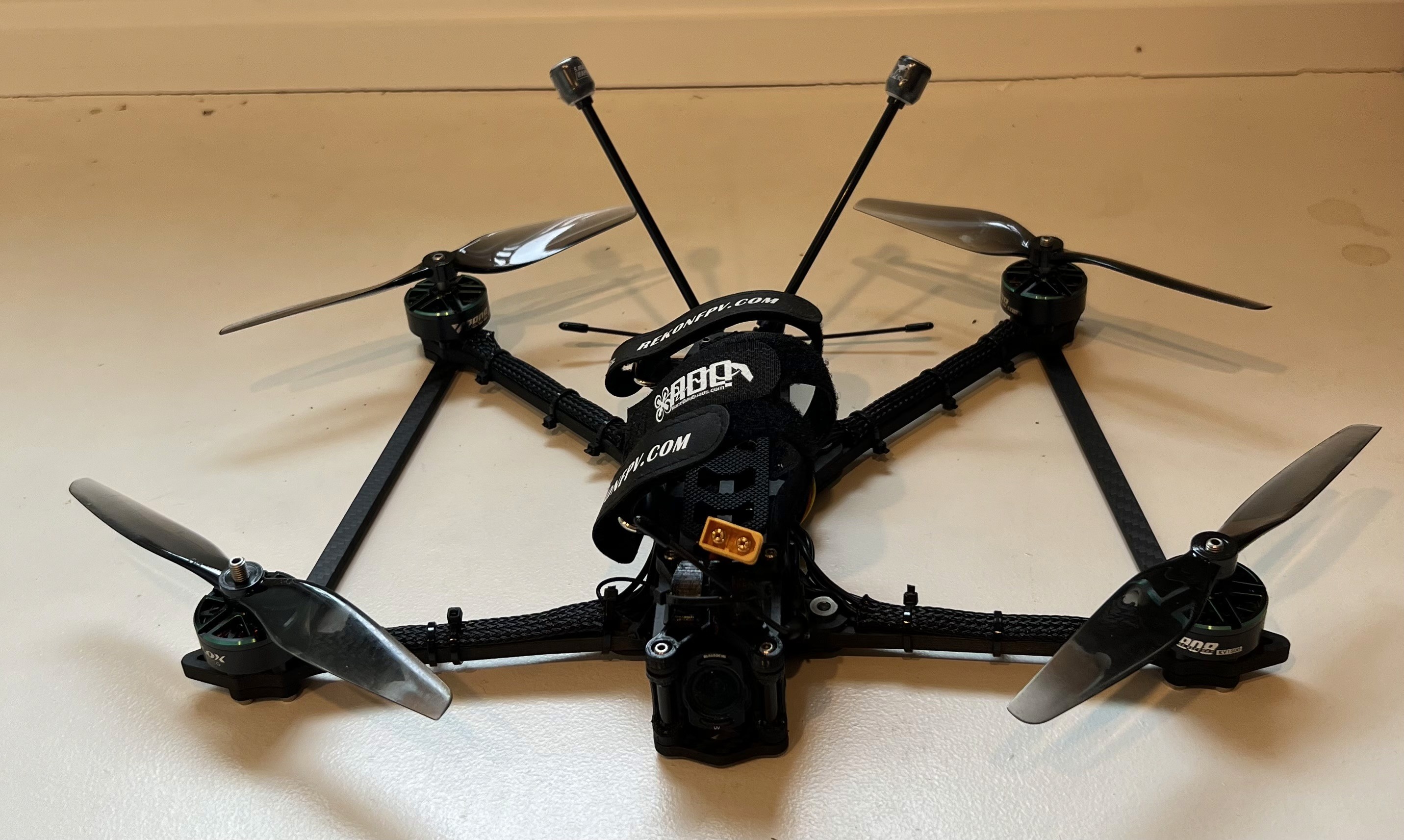
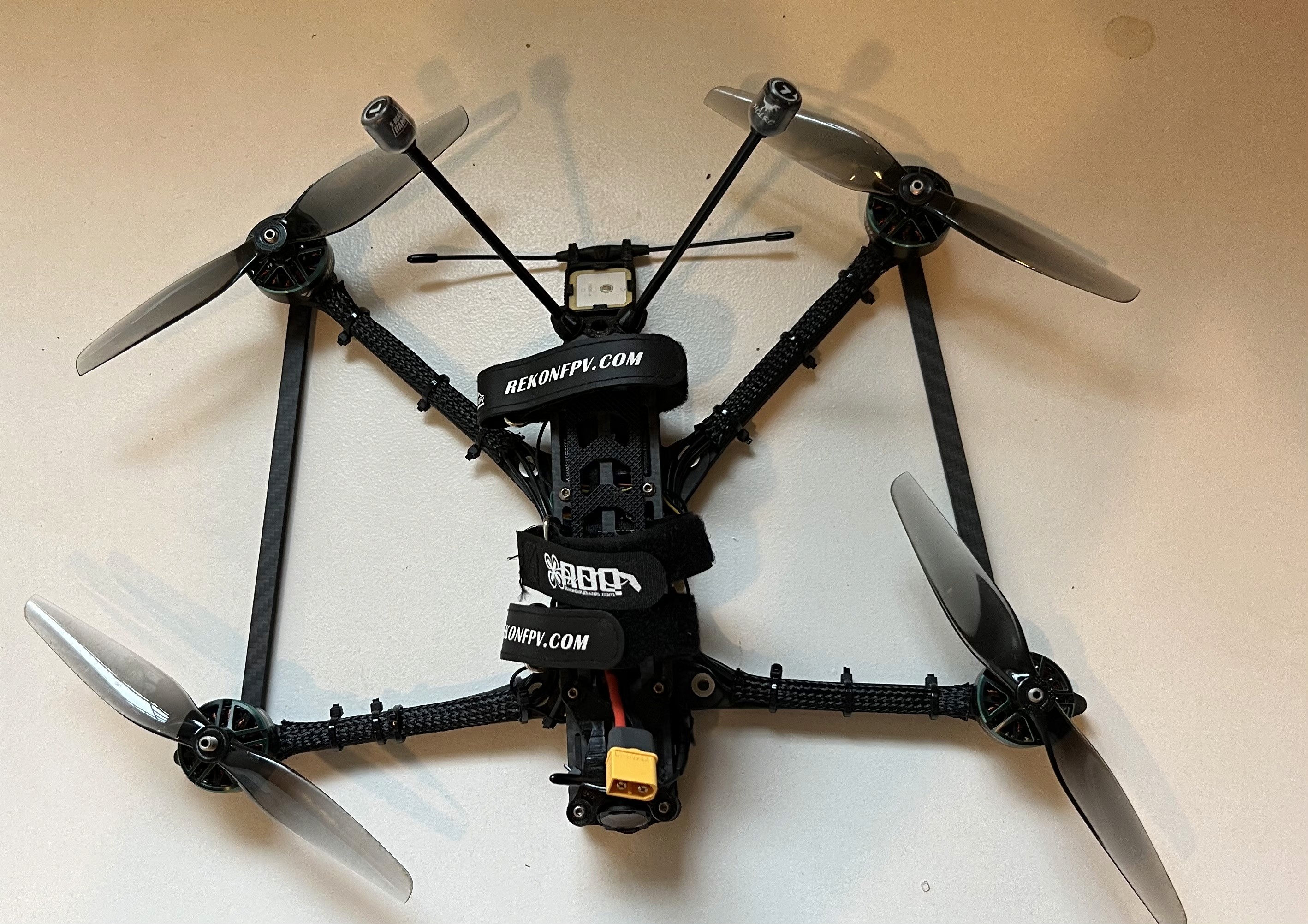
I designed the quadcopter around one main requirement: maintaining a stable video link and reliable control at long range. I created the bill of materials, sourced the parts, assembled the airframe, and tuned the finished aircraft. The build uses a Rekon7 Long Range HD O3 7-inch carbon frame, a T-Motor Velox Cine F7 X8 HD 3–6S 30 × 30 flight controller, four T-Motor V2808 1500 KV motors, HQProp 7 × 4.5 bi-blade propellers, an HGLRC M80 Pro GPS module, and a 6S 22.2 V 3000 mAh Li-ion pack selected for endurance rather than peak current. Video runs through a DJI O3 Air Unit, while control uses a TBS Crossfire Nano SE on 900 MHz UHF. These are two independent links, each with its own failure mode. Based on the battery capacity, expected cruise efficiency, and communication systems, I estimated a practical out-and-back range of roughly 3 to 5 miles in favorable conditions.
Most of the engineering happened before soldering began. I budgeted current across the flight controller’s regulated rails against the O3’s approximately 2 A draw. I also matched propeller pitch and motor KV to the battery’s 10C discharge limit, which favored efficient cruising over punch-out performance.
Assembly included lead-free solder on 12 AWG battery leads, a capacitor across the XT60 pads to absorb 6S voltage spikes, and grounded copper foil tape to shield the O3 from RF noise that can cause video breakup at range. I then configured the flight controller, calibrated the ESCs, set failsafes, configured GPS functionality, and tuned the PIDs through multiple test flights.
The project gave me practical experience in systems integration, including power budgeting, RF interference, vibration management, GPS integration, and verifying component compatibility before placing an order.